Home Stump Grinding From Local Providers
Start with a quick request
A stump looks harmless. Then it sprouts, rots, or snags the mower. Stump grinding fixes that. A provider uses a machine with a spinning blade. It chews the stump into chips, a few inches below the ground.
Rollswage Tree Service is a referral service. We do not grind stumps ourselves. You call or send a short form, and we point you to an independent provider in our network near Warren. That means less searching for you. The provider sets the price and the plan. Ask for a written quote before any work starts.
Got a stump in the yard? Start here
A stump is easy to ignore. It sits there for a year or two. Then the problems start.
Stump grinding is the fix most homeowners pick. A machine shaves the stump down into chips. The hole fills with mulch, and your yard is flat again.
Rollswage Tree Service is a referral service. We help you reach an independent local provider in the Warren area. The provider does the grinding.
Signs a stump needs attention soon
Some stumps can wait. Others should not. Watch for these signs:
- New shoots pop up from the stump or the roots.
- The wood is soft, spongy, or crumbling.
- Mushrooms or bugs show up around it.
- Someone has tripped over it.
- You plan to build, plant, or lay sod on that spot.
If you see the first two, act sooner. Live shoots mean the roots are still alive and growing.
Problems old stumps cause
Pests move in
Rotting wood draws ants, termites, and beetles. They like damp wood. Our hot, humid summers make this worse. Bugs that start in a stump can spread to nearby wood, like a fence or a porch post.
Trip and mower hazards
A low stump hides in tall grass. Kids, pets, and guests can trip on it. Mowers can hit it and bounce hard.
Suckers and spreading roots
Suckers are thin shoots that grow from the roots. Some trees send them up all over the lawn. Grinding the stump stops most of that, but a few roots may need extra care.
How stump grinding works
The provider brings a stump grinder. It is a wheeled machine with a spinning cutting wheel. The operator swings the wheel back and forth across the stump. Chips fly off layer by layer.
Most providers grind about 6 to 12 inches below the ground. Some go deeper if you plan to plant a new tree there. Say what you want to do with the spot when you talk to the provider.
What you are left with
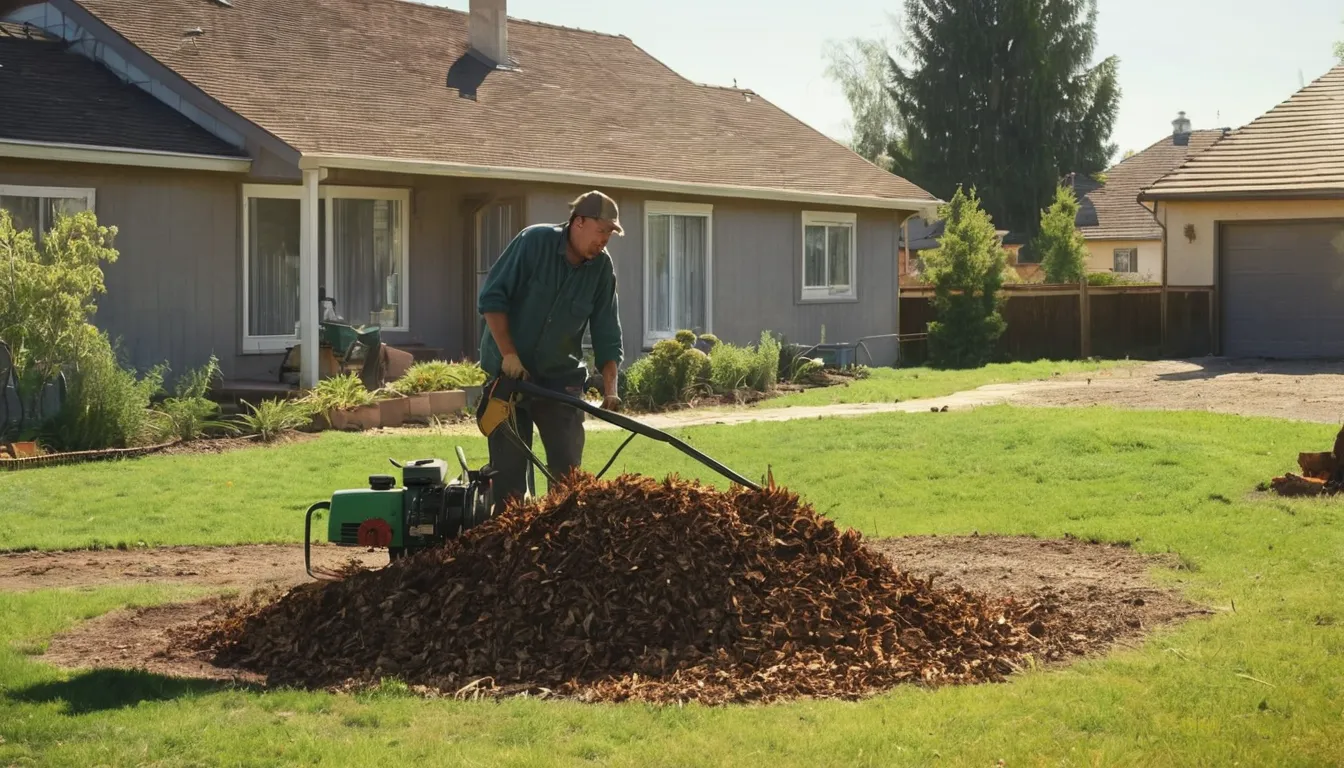
You get a mound of wood chips. Many homeowners use them as mulch in garden beds. Others ask the provider to haul them away.
Grinding vs. full stump removal
These are two different jobs. Grinding wears the stump down. It leaves most of the roots in the ground, where they rot slowly. Full removal digs out the stump and the main roots. It takes heavy equipment and leaves a big hole.
For most yards, grinding is simpler and less messy. Full removal makes sense if you are pouring a slab or building right on that spot. Ask the provider which one fits your plan.
What affects the price
No two stumps cost the same. The provider looks at a few things:
- Width. Wider stumps take more time. Many providers price by the inch.
- Number of stumps. Several stumps in one visit often cost less each.
- Access. A tight gate or a steep slope can slow the job.
- Roots. Roots above ground add work.
- Cleanup. Hauling chips or filling the hole costs extra.
See the price table below for typical U.S. ranges. Your quote may differ. Always get it in writing.
Getting ready for grinding day
A little prep helps the visit go smoothly.
Clear the area
Move toys, hoses, and lawn chairs. Give the machine room to work.
Know what is underground
Grinders cut deep. Tell the provider if you have a sprinkler line, a buried wire, or a septic area nearby. Many utility companies offer a line-marking service. Ask the provider if they need you to arrange it.
Keep kids and pets inside
Chips and dust can fly. Keep everyone indoors while the machine runs.
Stumps left from past removals
Many yards have an old stump from a tree cut down years ago. Maybe it came with the house. Maybe a storm tree clearance left it behind. Providers handle these all the time.
Old stumps are often softer, so they may grind quickly. But hidden rock or buried metal can slow things down. Tell the provider the stump's age and what you know about the spot.
A tree that is still standing, or one that has just fallen, is a different job. That falls under tree removal or emergency tree removal. Those have their own pages here.
What to do after grinding
You have a few easy choices.
- Use the chips. Spread them in beds. Keep them a few inches from plant stems and house walls.
- Fill the hole. Add topsoil and press it down. Add more as the chips break down.
- Plant grass. Rake the area, add seed, and water often.
- Plant a new tree. Wait for the chips to settle, or ask the provider to remove them first.
In cold climates with deep frost, early spring or fall is a good time to reseed. Spring flooding can wash loose soil away, so pack it well.
Questions to ask the provider
Before you say yes, ask:
- Is the quote in writing, and what does it cover?
- How deep will you grind?
- Do you haul away the chips?
- Will you fill the hole?
- Do you carry insurance for your work?
- Do you charge a minimum fee?
A good provider answers these in plain words. If you feel rushed, ask someone else.
Ready to get started?
Start with a quick request. Request a callback to check provider availability, or fill in the estimate form. Calling is quick, and the provider takes it from there.
What's Included
Stump Grinding
A provider uses a grinder to shred the stump into chips below ground level.
Surface Roots
Many providers can also grind roots that stick up above the soil and trip people.
Chip Cleanup Options
Ask the provider to leave the chips for mulch, or to haul them away.
Written Quotes
A local provider looks at the stump and gives you a clear price before work begins.
What stump grinding typically costs
These are typical U.S. ranges. Prices vary by stump size, root spread, access, and your area. Treat them as a guide, and ask the provider for a written quote.
| Item | Typical range | Notes |
|---|---|---|
| Small stump (under 12 inches wide) | $100 – $250 | Often a minimum visit fee applies |
| Medium stump (12 – 24 inches wide) | $200 – $450 | Many providers price by the inch |
| Large stump (over 24 inches wide) | $400 – $1,000 | Takes more time and a bigger machine |
| Surface roots | $75 – $300 | Depends on how far they spread |
| Chip haul-away | $50 – $200 | Many homeowners keep chips as mulch |
| Fill hole with topsoil | $50 – $150 | Soil may settle, so you may need more |
How It Works
Make a request
Request a callback to check provider availability, or send the short estimate form with a few details.
Get matched locally
Rollswage Tree Service points you to an independent provider in our network near you.
Review the quote
The provider checks the stump and gives you a written price and plan.
Grinding day
The provider grinds the stump, and you choose how to handle the chips and the hole.
Why Call Rollswage Tree Service
Less searching, more help
One quick request points you to an independent local provider, so you skip the long search.
Plain answers
We keep the first step simple and explain terms in a few words.
Local providers
Providers in our network work near Warren and know local soil and weather.
No obligation
Requesting an estimate does not commit you to hire anyone.
Other Services
Need home stump grinding in Warren?
Have a tree that is down, leaning, or in the way? Request a callback or send a request. We will point you to a local provider in our network.
No obligationHome Stump Grinding FAQ
How long does stump grinding take?
Most stumps take under an hour. Large stumps or ones with wide roots can take longer. The provider will give you a time estimate after seeing the stump, and plans can vary by job.
Is stump grinding better than removing the whole stump?
For most yards, yes. Grinding is quicker and leaves less mess. Full removal digs out the roots and may suit a building project. Ask the provider which fits your plan.
Can I plant grass or a tree where the stump was?
Yes. Fill the hole with topsoil, then seed grass. For a new tree, ask the provider to remove most chips first, or wait for them to settle and break down.
Reach a local provider
Have a tree that is down, leaning, or in the way? Request a callback or send a request. We will point you to a local provider in our network.
No obligation